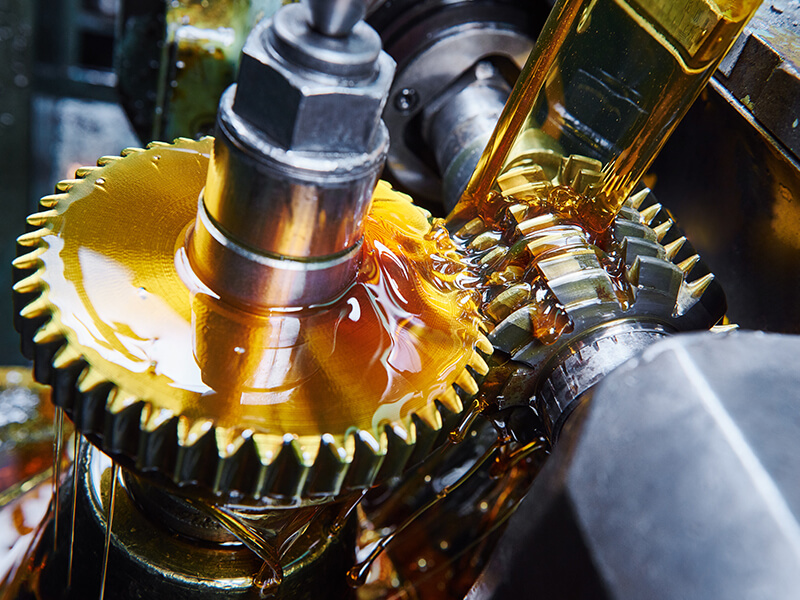
Gear oil is a specially formulated fluid designed to ensure the efficient operation and long lifespan of gear systems in automotive and marine applications. It should not be confused with engine oil, as gear oil meets different requirements and contains special additives that protect gear mechanisms.
Gear oil performs several important functions:
Gear oils reduce friction and minimize wear on gears and bearings.
Gear oil absorbs the heat generated during operation and ensures protection of components even under high pressure.
In components like differentials and transfer cases that operate under high pressure, gear oil provides protection against shock loads through special additives.
The oil prevents the formation of deposits and helps maintain smooth gear operation.
Gear oil is produced in various types and formulations. Maximum offers users a wide range of quality gear oil products.
Manual gear oil is designed for manual transmission systems.
Characteristics:
Reduces friction
Ensures smooth shifting in manual transmissions
Stable under high heat and pressure
Use: Vehicles with manual transmission systems.
Automatic gear oil is used in automatic transmissions.
Characteristics:
Lower viscosity
Facilitates energy transfer from the engine to the transmission
Stable performance under high pressure and temperature
Use: Vehicles with automatic transmissions.
Differential gear oil is designed for gear systems that allow wheels to rotate at different speeds.
Characteristics:
Resistant to high pressure and shock loads
Protects against friction and wear with special additives
Use: Differentials and other high-load gear systems.
Used in transfer cases that distribute power to all wheels in 4WD and AWD vehicles.
Characteristics:
Protects gears and bearings
Resistant to medium-to-high pressure and heat
Use: 4WD and AWD systems.
Maximum offers both mineral and synthetic gear oils.
Made from traditional base oils
More affordable
Provides moderate performance and protection
Chemically enhanced
Stable against temperature changes
Provides longer-lasting protection and higher performance
Gear oil viscosity indicates the thickness of the oil.
For example, a 75W-90 viscosity grade:
75W – Cold-temperature flow
90 – High-temperature thickness
Thicker oils offer better protection under high heat and pressure, commonly used in manual transmissions. Automatic transmissions typically require lower-viscosity oils.
Manual or automatic transmission
Differential and transfer case requirements
Heat and pressure conditions
Viscosity is a critical factor
Oil must meet API and SAE standards
Mixing different types can cause performance loss and system damage.
Gear oil levels must be checked regularly. Low oil levels can damage gear mechanisms.
Mineral oils require more frequent changes
Synthetic oils last longer
High heat and extended operation affect oil quality.
Oxidized or thinned oil can damage the gear system.
With Maximum gear oil products, you get:
Enhanced longevity for gear systems
Protection against friction and heat
A wide selection of synthetic and mineral options for different needs
Choosing the right gear oil and maintaining it properly ensures maximum vehicle performance and long-term safety.
12 Déc 2025